

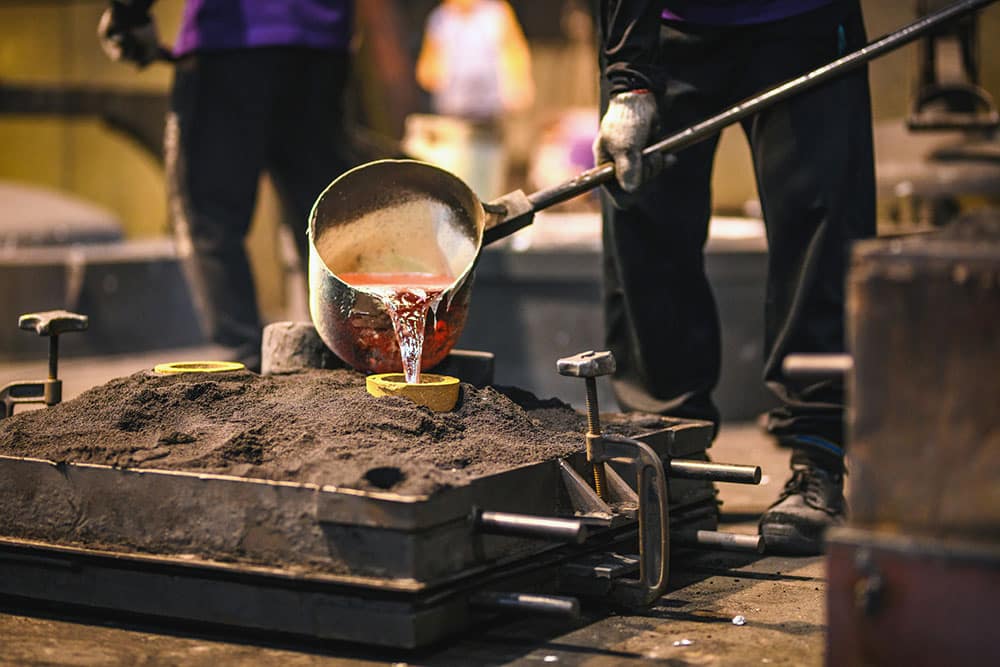
Aluminium Casting Design: How to Reduce Cost, Lead Time and Defects with the Right UK Foundry
Successful aluminium casting doesn’t start on the foundry floor — it begins at the design stage. Poorly designed components often lead to unnecessary cost, extended lead times, excessive machining, and avoidable casting defects.
For engineers and procurement teams working with a UK foundry, understanding the fundamentals of aluminium casting design can make the difference between a smooth, cost-effective project and one plagued by delays and rework.
At DAC Industries, we work closely with customers to optimise designs before production begins. This article explains how good aluminium casting design reduces risk, improves quality, and speeds up delivery — while sharing practical design rules every engineer should know.
Why Aluminium Casting Design Matters
Design decisions directly influence:
- casting yield and material usage
- tooling complexity and cost
- machining time
- defect rates (porosity, shrinkage, distortion)
- achievable lead times
Engaging an experienced UK foundry early in the design process allows potential issues to be resolved before they become expensive problems.
Key Aluminium Casting Design Principles
1. Maintain Uniform Wall Thickness
One of the most important rules in aluminium casting design is uniform wall thickness.
Why it matters
- Thick sections cool more slowly than thin sections
- Uneven cooling leads to shrinkage, porosity and warping
- Increases risk of internal defects
Best practice
- Aim for consistent wall thickness wherever possible
- If thickness changes are unavoidable, use gradual transitions
- Avoid sudden changes in section size
Typical guideline
- Sand casting: 5–8 mm minimum (application dependent)
- Gravity die casting: thinner sections are possible, but consistency is still key
2. Use Generous Fillets and Radii
Sharp internal corners act as stress concentrators and restrict metal flow.
Why it matters
- Improves metal flow during pouring
- Reduces hot spots and cracking
- Improves tool life
- Enhances fatigue performance
Best practice
- Add fillets to all internal corners
- Avoid sharp external edges where possible
Rule of thumb
- Internal radius ≥ 0.5 × wall thickness
- Larger radii improve casting quality and reduce machining
3. Design with Draft Angles in Mind
Draft allows the casting to be removed cleanly from the mould or die.
Why it matters
- Insufficient draft causes sticking
- Leads to mould damage, rework or scrap
- Increases tooling wear
Typical draft angles
- Sand casting: 1.5°–3°
- Gravity die casting: 0.5°–1°
A UK foundry can advise on the correct draft based on process, alloy and surface finish requirements.
4. Avoid Isolated Heavy Sections
Thick, isolated masses of material are a common cause of shrinkage porosity.
Why it matters
- These areas cool last
- Difficult to feed with molten metal
- Often require excessive risers or post-machining
Better alternatives
- Core out thick sections
- Use ribs instead of solid blocks
- Spread mass evenly across the design
This approach reduces material usage, improves cooling behaviour and lowers cost.
5. Use Ribs for Strength — Not Thickness
If additional strength is required, ribs are far more effective than increasing wall thickness.
Benefits
- Improves stiffness
- Reduces weight
- Enhances cooling uniformity
- Lowers material cost
Design tips
- Rib thickness: ~60–70% of wall thickness
- Use fillets where ribs meet walls
- Avoid intersecting ribs without radii
6. Design for the Casting Process, Not Just the Final Shape
Different aluminium casting processes have different capabilities.
Sand casting
- Best for complex shapes and lower volumes
- Allows greater flexibility
- Surface finish is rougher
Gravity die casting
- Better surface finish and repeatability
- Higher tooling cost, lower per-part cost at volume
- Tighter tolerances
Designing with the correct process in mind allows a UK foundry to deliver better quality at lower cost.
Common Aluminium Casting Design Mistakes
Avoiding these mistakes can dramatically improve results:
- Sharp internal corners
- Excessive wall thickness “just to be safe”
- No allowance for machining
- Over-tight tolerances on as-cast features
- Designing without consulting the foundry
Early design review with your aluminium casting supplier prevents these issues before tooling begins.
How Aluminium Casting Design Impacts Cost and Lead Time
Good design leads to:
- simpler tooling
- higher metal yield
- reduced scrap
- faster machining
- fewer production delays
Poor design results in:
- extended tooling development
- rework and redesign
- longer lead times
- higher unit cost
This is why experienced UK foundries encourage design collaboration early in the project lifecycle.
Engineer-Friendly Aluminium Casting Design Rules (Quick Reference)
| Wall thickness | Keep uniform where possible |
| Draft angle | 1.5–3° (sand), 0.5–1° (die) |
| Rib thickness | 60–70% of wall thickness |
| Section changes | Gradual transitions only |
| Heavy sections | Core out or redesign |
Why Work with a UK Foundry Early in the Design Stage
A knowledgeable UK foundry doesn’t just pour metal — it helps optimise your design for manufacturability, performance and cost.
At DAC Industries, our design-led approach to aluminium casting ensures:
- fewer defects
- predictable lead times
- reduced total project cost
- consistent, high-quality components
Conclusion
Effective aluminium casting design is one of the most powerful tools for reducing cost, shortening lead times and improving quality. By following proven design principles and collaborating early with an experienced UK foundry, engineers can avoid common pitfalls and achieve better outcomes from the very first casting.
If you’re developing a new aluminium component or reviewing an existing design, early engagement can make all the difference.


Leave a Reply